


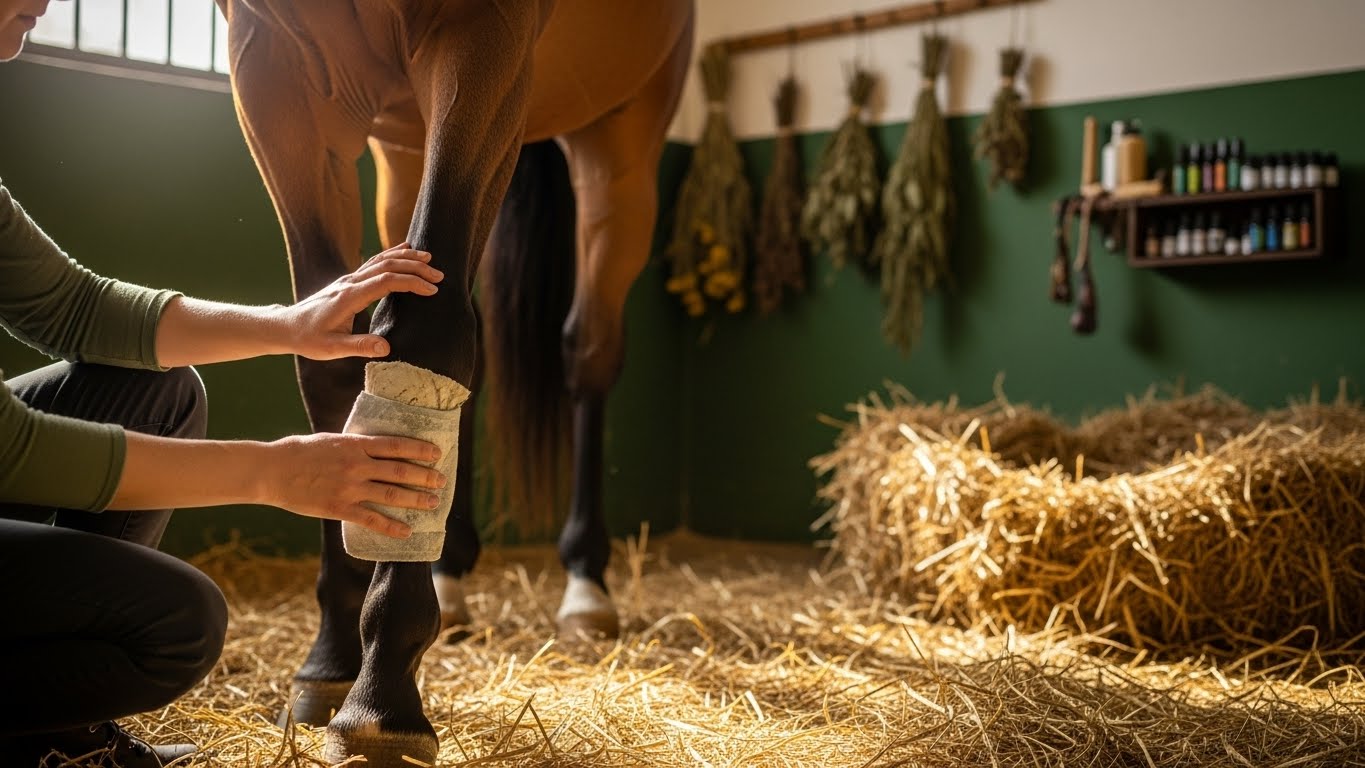
Pain relief for horses becomes essential knowledge when you realize that all horses deal with pain at some point in their lives. Whether it’s from common surgical procedures like castration, acute colic episodes, or chronic conditions such as degenerative joint disease and laminitis, our equine companions frequently need our help managing discomfort.
As horse owners, we face a challenging reality – veterinarians truly only have a small handful of pharmaceutical medications available to treat painful conditions in horses. The three main NSAIDs (phenylbutazone, flunixin meglumine, and firocoxib) form the backbone of medical pain management, with phenylbutazone still being the most widely used due to cost and ease of use. However, beyond medications, there are also promising natural alternatives to consider. From supplements like Boswellia and turmeric to therapies such as acupressure and massage, the options for helping our horses feel better continue to expand.
In this comprehensive guide, we’ll explore both medical and natural approaches to equine pain relief, helping you make informed decisions about your horse’s comfort and wellbeing. Furthermore, we’ll discuss how to recognize pain signals, when to use different treatments, and how to develop effective pain management strategies for specific conditions.
Recognizing Pain Signals in Horses
As prey animals, horses instinctively hide signs of pain and vulnerability to avoid appearing weak to predators. Unlike humans who can verbalize their discomfort, horses communicate through subtle changes in behavior and physical appearance. Recognizing these signals early allows for prompt intervention and appropriate pain relief.
Behavioral changes that indicate discomfort
Horses in pain often display altered behaviors that can be misinterpreted as stubbornness or disobedience. A normally cooperative horse that suddenly refuses to be bridled or saddled may be experiencing discomfort rather than being “stubborn,” highlighting the importance of recognizing signs that point to the need for pain relief for horses. Changes in social behavior, including withdrawal from herd mates or increased aggression, frequently indicate pain. Notably, behavioral shifts like decreased appetite, restlessness, weight-shifting, and unusual posture serve as key indicators of discomfort.
Research shows many behavioral issues previously attributed to personality traits actually stem from unrecognized pain. In one study, 46% of horses deemed sound by their owners were found lame during veterinary examination, while another revealed 58% of cutting horses with decreased performance were diagnosed with lameness.
Physical signs of acute vs. chronic pain
Acute pain typically manifests through more obvious signals: sweating without exertion, pawing, rolling, kicking at the belly, and muscle tremors. A horse experiencing acute colic might lie on its back showing severe distress or display less dramatic signs if the condition is mild.
Conversely, chronic pain develops gradually and can be exceptionally difficult to detect. Horses with chronic conditions often exhibit subtle changes: slight shifts in posture, decreased stride length, reduced suspension in gaits, or minor facial tension. Additionally, chronic pain may cause weight loss, coat problems, and reduced performance without obvious lameness.
Using pain scales to assess severity
Veterinarians now employ standardized pain assessment tools to objectively evaluate equine discomfort. The Horse Grimace Scale (HGS) evaluates facial expressions including ear position, orbital tension, mouth tightness, and nostril flaring. Originally developed for post-surgical pain, it’s since been validated for conditions like laminitis and dental disorders.
For comprehensive assessment, the Composite Pain Scale incorporates both behavioral and physiological responses. This multidimensional approach shows good reliability with an intraclass correlation coefficient of 0.75, making it particularly effective for evaluating orthopedic pain. The Equine Pain Scale (EPS) and Horse Chronic Pain Scale (HCPS) provide additional options for different pain scenarios.
Early recognition of pain signals isn’t merely about comfort it’s essential for accurate diagnosis, appropriate treatment selection, and monitoring response to pain relief strategies.
Pharmaceutical Pain Relief Methods
Non-steroidal anti-inflammatory drugs (NSAIDs) form the cornerstone of pharmaceutical pain management for horses, with phenylbutazone (“Bute”) remaining the most widely used because of its affordability and ease of administration.
How NSAIDs work to reduce inflammation and pain
NSAIDs function by blocking cyclooxygenase (COX) enzymes that produce prostaglandins compounds responsible for inflammation, pain, and fever. There are two types: COX-1 enzymes protect the stomach lining and activate blood platelets, whereas both COX-1 and COX-2 create inflammation-promoting prostaglandins. Traditional NSAIDs like phenylbutazone and flunixin meglumine block both enzymes, consequently carrying higher risks of side effects. In contrast, COX-2 selective medications like firocoxib target primarily inflammation pathways, thus potentially offering safer long-term use.
Administration methods and dosing considerations
Proper administration is critical for safety and efficacy. Common dosing recommendations include:
- Phenylbutazone: 2.2-4.4 mg/kg orally every 12-24 hours
- Flunixin meglumine: 1.1 mg/kg orally every 12-24 hours
- Meloxicam: 0.6 mg/kg orally every 24 hours
- Firocoxib: 0.1 mg/kg orally every 24 hours
Most NSAIDs come in multiple forms oral tablets, pastes, or powders for at-home use, plus injectable solutions for veterinary administration. Importantly, injectable forms must only be given intravenously, as intramuscular injection can cause devastating tissue damage. For firocoxib, a loading dose of 0.3 mg/kg helps reach therapeutic levels within 24 hours instead of the usual 5-7 days.
Long-term medication management
Extended NSAID use requires careful monitoring for potential complications. Common side effects involve gastrointestinal ulceration, right dorsal colitis, or kidney damage. Regular blood tests checking protein and creatinine levels help detect early signs of trouble. Never combine different NSAIDs simultaneously allow at least 24 hours between switching medications. Moreover, if a horse doesn’t respond to one NSAID, trying a different one might yield better results.
When prescription pain relief is necessary
Beyond NSAIDs, other options exist for severe or complex pain scenarios. Acetaminophen at 20-30 mg/kg has shown promise as either an alternative or complement to NSAIDs. For neuropathic pain, gabapentin may provide relief despite its low bioavailability in horses. Opioids like butorphanol work effectively for visceral pain, although they can reduce gut motility with prolonged use.
Holistic and Natural Approaches
Beyond pharmaceutical options, holistic approaches offer effective pain relief for horses with fewer side effects. Many natural methods can complement traditional veterinary care or serve as standalone solutions for mild discomfort.
Supplements that support joint health and reduce inflammation
Natural supplements can significantly reduce equine pain and inflammation. Turmeric contains curcumin, a potent anti-inflammatory compound that helps alleviate joint pain. Boswellia (Indian Frankincense) has shown clinical effectiveness for improving pain and physical function while being gentle on the digestive system. MSM (methylsulfonylmethane) supports joint health through its role in collagen synthesis and has demonstrated positive results in research. Glucosamine and chondroitin work together to maintain cartilage elasticity and aid repair, particularly beneficial for arthritic horses.
Bodywork techniques for pain management
Manual therapies address pain through different mechanisms. Chiropractic care corrects and relieves pressure in spinal column joints, restoring range of motion and neurological function. Massage therapy reduces muscle tension, improves blood flow, and can change neurological signaling for pain processing. Myofascial release targets restrictions in fascial tissue, creating lasting change through sustained pressure that makes tissue more pliable and relieves pressure from pain-sensitive areas.
Cold and heat therapy applications
Cold therapy (cryotherapy) is most effective for fresh injuries, ideally within 36 hours of occurrence. It works by constricting blood vessels, reducing inflammation, and numbing the area. Apply ice for 20 minutes at a time with at least 30-minute breaks between sessions. Heat therapy becomes appropriate after acute inflammation subsides (typically 7 days post-injury). It increases circulation to accelerate healing and is particularly effective for wound healing, muscle spasms, and joint mobility.
Alternative therapies with scientific backing
Acupuncture, practiced for over 3,000 years, effectively addresses pain through stimulating the nervous system and prompting endorphin release. Several small clinical studies demonstrate its effectiveness for back and foot pain. Laser therapy (photobiomodulation) increases cellular activity and blood flow while enhancing tissue oxygenation. Extracorporeal shockwave therapy targets high-energy sound waves to increase blood flow and tissue regeneration, showing success with navicular disease and tendon injuries.
Lifestyle modifications that reduce pain
Maintaining appropriate body condition is essential excess weight increases joint stress. Regular but appropriate exercise helps maintain flexibility without overloading joints. Providing proper footing and turnout reduces joint strain, while ensuring good hoof balance prevents unnecessary stress on the musculoskeletal system.
Condition-Specific Pain Management
Different equine conditions require tailored pain management approaches. Effective treatment often involves combining medical interventions with supportive care for optimal results.
Arthritis and joint pain solutions
Joint pain from osteoarthritis affects over half of horses older than 15 years. For performance horses, the goal is returning to competition; for older horses, maximizing comfort becomes paramount. Intra-articular corticosteroids provide rapid relief from inflammation but require careful administration. Hyaluronic acid supplements joint fluid, offering both lubrication and anti-inflammatory benefits. Cold weather frequently exacerbates arthritic pain consider using neoprene wraps overnight for carpi and hocks to trap beneficial heat.
Addressing muscle soreness and strains
Muscle soreness manifests through swelling, lameness, stiffness, and cramping. Prevention starts with proper tack fitting poorly fitted saddles cause compensation patterns leading to secondary pain. Appropriate warm-up and cool-down routines significantly reduce soreness risk. For treatment, alternating hot and cold therapy increases circulation while reducing swelling. Gentle massage improves blood flow to affected muscles; nevertheless, avoid deep tissue work unless performed by professionals.
Managing laminitis pain
Laminitis pain management presents unique challenges given the intense discomfort within the rigid hoof capsule. Controlled hypothermia (ice baths) significantly decreases lamellar injury and pain when applied continuously for 48-72 hours. For metabolic causes, controlling insulin through diet modification and medications like metformin (30mg/kg twice daily) becomes crucial alongside pain control.
Post-surgical and injury recovery protocols
Rehabilitation following surgery typically progresses through three phases. Initially, focus on pain mitigation using cold therapy, compression, and controlled movement. Subsequently, incorporate mobility exercises using resistance bands and poles. Finally, gradually reintroduce sport-specific demands. Throughout recovery, consistent monitoring with adjustments to exercise protocols ensures optimal healing.
Chronic pain conditions and their treatment
Long-term pain often requires multimodal approaches. Beyond NSAIDs, consider gabapentin for neuropathic pain, although higher doses (20mg/kg) may be needed. Lidocaine transdermal patches benefit horses with persistent pain following tendon injuries. Importantly, recognize that chronic pain manifests differently than acute pain subtle behavioral changes often signal discomfort in long-suffering horses.
Conclusion
Managing pain effectively represents one of our most important responsibilities as horse owners. Throughout this guide, we’ve explored how horses communicate their discomfort through subtle behavioral and physical changes that require our careful attention. Recognizing these signals early allows for prompt intervention, ultimately leading to better outcomes.
Pharmaceutical options certainly play a vital role in equine pain management. NSAIDs like phenylbutazone remain the cornerstone of treatment for many conditions, though their use must be balanced against potential side effects, especially during long-term administration. Nevertheless, these medications provide critical relief when our horses need it most.
Natural alternatives offer complementary or sometimes standalone solutions that deserve serious consideration. Supplements such as Boswellia and turmeric have demonstrated meaningful anti-inflammatory effects, while therapies like acupuncture and massage address pain through different mechanisms. These approaches often carry fewer side effects than pharmaceuticals, making them particularly valuable for chronic conditions.
Condition-specific strategies prove most effective for addressing particular issues. Arthritis demands different protocols than muscle strains or laminitis, and post-surgical recovery requires carefully tailored rehabilitation plans. Additionally, lifestyle modifications including appropriate exercise, proper footing, and weight management significantly impact our horses’ comfort levels.
Finding the right balance between medical and natural approaches often yields the best results. Most experienced horse owners eventually develop a toolkit of solutions they can apply based on their horse’s specific needs. Therefore, working closely with veterinarians while staying informed about emerging research helps us make the best decisions for our equine companions.
Pain management for horses continues to evolve as research advances our understanding of both pharmaceutical and natural approaches. Regardless of which methods we choose, our ultimate goal remains the same – ensuring our horses live comfortable, pain-free lives. After all, their wellbeing depends entirely on our ability to recognize, understand, and effectively address their pain.