


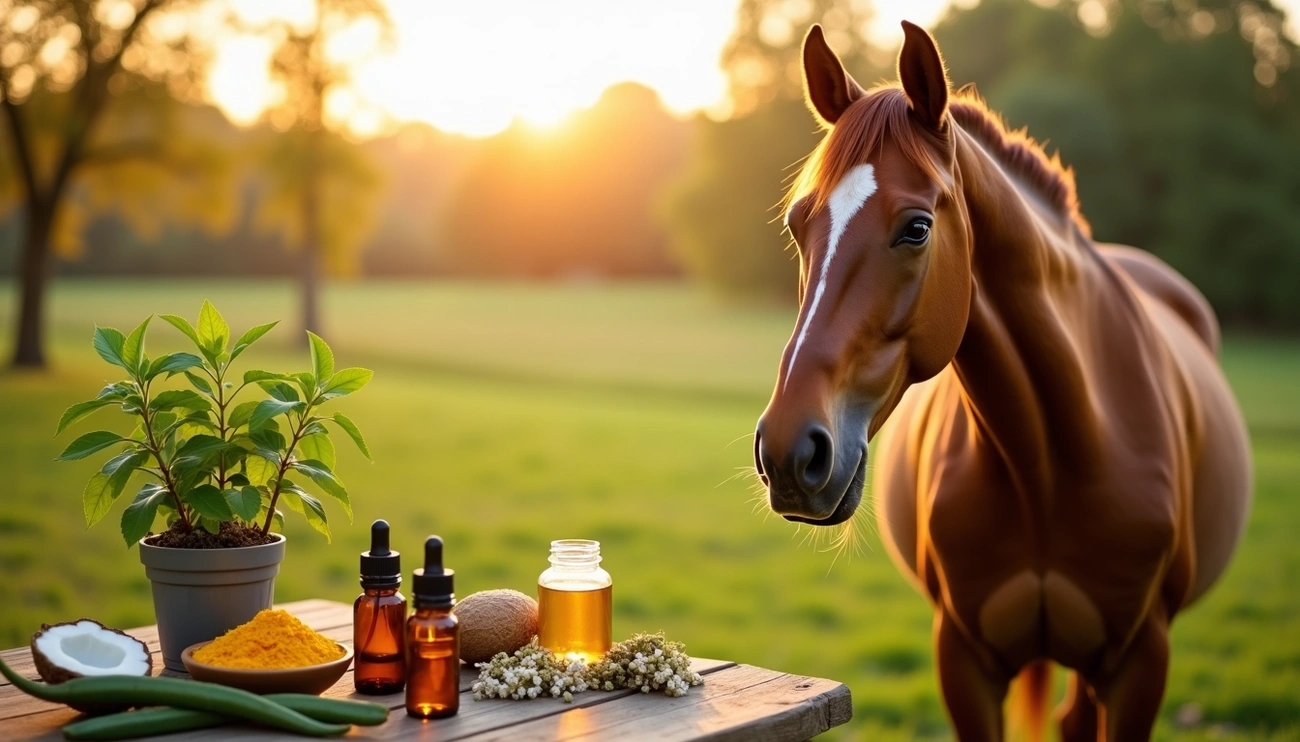
Inflammation can significantly impact your horse’s health, performance, and quality of life, which is why many owners are seeking to reduce horse inflammation naturally. Throughout time, horses have been self-medicating with herbs, and these natural anti-inflammatory remedies have been used since ancient times to improve equine health.
When it comes to our horses’ well-being, we’ve found that natural remedies can be a valuable tool in supporting their health, but they should be used thoughtfully and in conjunction with traditional veterinary care. Most natural supplements lack FDA approval because there isn’t enough research to support their effectiveness or safety. However, many elements of an anti-inflammatory approach, such as emphasizing plants and healthy fats, translate naturally to horses.
In this guide, we’ll explore various vet-approved natural methods to combat inflammation in horses. From digestive health remedies to joint support, skin care solutions, and calming options, we’ll cover practical approaches that focus on using natural ingredients to promote healing and improve your horse’s quality of life.
Digestive Health Remedies
Horses often struggle with digestive issues that can lead to inflammation throughout their bodies. Fortunately, nature provides several effective remedies that support equine digestive health.
Slippery elm for gut lining support
Derived from the inner bark of the slippery elm tree, this remedy creates a soothing gel-like substance when mixed with water. The mucilage in slippery elm forms a protective barrier over the stomach lining, reducing irritation and promoting healing, illustrating the gentle principles that can help reduce horse inflammation naturally. While it doesn’t directly reduce stomach acid production like pharmaceuticals, its mucilage helps neutralize excess acid.
One of the greatest advantages of slippery elm is that it stimulates saliva production and increases forage consumption, which naturally buffers stomach acid. Additionally, unlike some conventional medications, this plant-based remedy has minimal side effects, making it suitable for long-term use.
To use slippery elm effectively, add 1–2 tablespoons twice daily as a paste or mix it with feed. For best results, ensure you’re using light-colored slippery elm powder, which indicates purity.
Peppermint to ease gas and bloating
Peppermint stands out as a powerful digestive aid thanks to the menthol it contains, which acts as a natural antispasmodic. This helps relax the muscles of the gastrointestinal tract, reducing spasms and discomfort. Its antispasmodic properties are particularly effective in reducing gas and bloating in horses.
Besides easing discomfort, peppermint can help reduce the risk of colic by promoting a healthy digestive system. The pleasant aroma and taste also encourage horses to eat more consistently, enhancing feed efficiency and nutrient absorption.
For daily use, add approximately 20 grams of dried peppermint or 1-2 handfuls of fresh mint to your horse’s feed.
Aloe vera for ulcer relief
Aloe vera inner leaf gel contains numerous compounds with anti-inflammatory and soothing effects on the digestive tract. In a study comparing aloe vera to omeprazole for treating equine gastric ulcers, 56% of horses with squamous ulcers showed improvement after aloe vera treatment.
Although omeprazole performed better with an 85% improvement rate, aloe vera still offers notable benefits for horses with sensitive stomachs. The polysaccharides in aloe vera, particularly acemannan, support wound healing by stimulating immune system cells and accelerating healing processes.
For optimal results, consult your veterinarian about appropriate dosing, as research has used higher doses than typically recommended by manufacturers.
Joint and Muscle Inflammation Support
As active animals, horses frequently develop joint and muscle inflammation that can limit mobility and decrease performance. Fortunately, several natural remedies offer relief without the side effects often associated with conventional medications.
Turmeric and its anti-inflammatory compound curcumin
Turmeric contains curcumin, a potent anti-inflammatory compound that has gained popularity among horse owners. Notably, curcumin reduces inflammation by inhibiting the cyclooxygenase enzyme 2 (COX-2) while maintaining beneficial COX-1 enzymatic function. This distinction matters enormously, as COX-1 protects your horse’s stomach lining.
Unlike traditional NSAIDs that inhibit both enzymes, curcumin offers a gentler approach for managing inflammation. Research from the United Kingdom and Germany revealed that curcumin significantly reduces inflammatory pathways in horses suffering from osteoarthritis. Furthermore, in one study with 11 horses and ponies, supplementation with a blend containing curcumin extract decreased inflammatory responses after an immune challenge.
Devil’s claw for arthritis and stiffness
Native to southern Africa, devil’s claw (Harpagophytum procumbens) contains harpagoside and harpagide, which exhibit impressive anti-inflammatory and pain-relieving properties. These compounds effectively inhibit TNF-α secretion, reducing cell movement into swollen tissues.
In a 2018 study at the University of Veterinary Medicine, researchers found that harpagoside reaches maximum concentration in a horse’s bloodstream just one hour after administration. Moreover, it remains detectable for up to 9 hours, indicating low metabolism risk and minimal drug interactions.
MSM and glucosamine for cartilage repair
Methylsulfonylmethane (MSM) is a naturally occurring sulfur compound that supports joint health while reducing inflammation and improving flexibility. Meanwhile, glucosamine serves as the essential building block of chondroitin sulfate, a molecule critical for joint production and protection.
Together, these supplements work to repair damaged cartilage and maintain its elasticity. Glucosamine increases the production of new cartilage while inhibiting free radicals and enzymes that break down joint tissues. MSM complements this action by providing sulfur a crucial element for maintaining healthy collagen, cartilage, and joint fluid.
Skin, Coat, and Immune System Boosters
A horse’s coat and skin serve as vital indicators of overall health and immune function. Properly supporting these systems can fundamentally reduce inflammation and improve your horse’s resilience against environmental challenges.
Coconut oil for dry skin and coat shine
Coconut oil stands out as an excellent natural moisturizer for equine skin issues. Rich in medium-chain fatty acids particularly lauric acid coconut oil offers antimicrobial, antiviral, and antifungal properties that boost immune function and fight off infections. For horses with dry, flaky skin, this oil provides deep moisturization that alleviates irritation and promotes healing.
I’ve found coconut oil especially effective for spur rubs, healing wounds, and general skin conditioning. Its antimicrobial properties make it valuable for treating minor cuts and scrapes, consequently helping prevent infection. For coat enhancement, apply coconut oil as a conditioner to the mane and tail, then wash out after letting it sit to achieve silky smoothness.
Lavender oil for minor wounds and stress
Research conducted at the University of Arizona discovered that lavender effectively calms horses and reduces their stress levels. During the study, horses sniffing lavender showed significantly increased RMSSD (a parameter of heart rate variability representing parasympathetic input), indicating relaxation.
Equally important, lavender essential oil helps regenerate skin cells and prevent scarring. It can be applied directly to sunburns, rashes, and skin irritations to alleviate pain and reduce itching from allergies.
Vitamin E and spirulina for immune health
Vitamin E functions as a potent fat-soluble antioxidant that protects immune cells from oxidative stress. It enhances immune response by boosting antibody production and reducing inflammation.
Indeed, spirulina, a nutritionally dense blue-green algae, further supports immune health through its rich antioxidant content. This superfood contains beta-carotene, vitamin C, and vitamin E powerful antioxidants that protect all cells. For horses with respiratory sensitivities, spirulina’s anti-inflammatory and antihistamine properties specifically help minimize reactions to common allergens.
Natural Calming and Pest Control Options
Managing stress and pests remains crucial in a comprehensive approach to reduce horse inflammation naturally. Both factors can significantly impact equine health when left unaddressed.
Chamomile and valerian root for stress relief
Chamomile contains apigenin, which provides both calming and sedative effects without diminishing alertness. This versatile herb not only soothes the nervous system but simultaneously promotes gut health by reducing inflammation in the stomach and intestines.
Valerian root complements chamomile perfectly with its powerful calming properties. The herb’s name originates from a Latin word meaning “to be strong and healthy” – appropriate for such an effective plant. First used consistently, valerian may take several days to show results but effectively reduces equine stress.
Citronella and neem oil as fly repellents
Citronella oil provides a gentle, plant-based insect repellent that effectively deters flies, midges, and mosquitoes. For optimal results, it can be applied as a spray, cream, gel, or lotion.
Neem oil offers both pest protection and skin benefits. This traditional ingredient contains natural anti-histamines that help treat itching skin conditions while repelling insects.
Garlic in diet for insect resistance
Despite garlic’s popularity, research indicates caution is warranted. Feeding garlic has not been scientifically verified as an effective insect repellent. Furthermore, garlic contains n-propyl disulfide, which can damage red blood cells and potentially cause Heinz body anemia.
Interestingly, topical application of diluted garlic oil (1%) proved 97% effective as an insect repellent in human research – potentially safer than feeding garlic.
Conclusion
Natural inflammation management represents one of the most important aspects of equine care we can provide for our horses. Throughout this guide, we’ve explored numerous vet-approved natural remedies that effectively support digestive health, joint function, skin condition, and overall well-being. While these natural approaches offer significant benefits, remember that they work best as part of a comprehensive health strategy rather than standalone treatments.
Most compelling evidence suggests that combinations like turmeric with its active compound curcumin, devil’s claw for joint support, and slippery elm for digestive health can significantly reduce inflammatory responses in horses. Additionally, proper use of immune-boosting supplements such as Vitamin E and spirulina helps strengthen your horse’s natural defense systems against inflammation.
Before implementing any new supplement regimen, consulting with your veterinarian remains essential. Each horse responds differently to natural remedies based on their unique physiology and health conditions. Your vet can help determine appropriate dosages and monitor your horse’s response to ensure optimal results.
The journey toward naturally reducing inflammation requires patience and consistency. Results may take time to become apparent, though many horse owners report noticeable improvements within weeks of starting a natural anti-inflammatory protocol. Above all, these natural approaches offer gentle, sustainable options for managing inflammation without the long-term side effects often associated with conventional medications.
As we look ahead to 2026 and beyond, the integration of traditional veterinary medicine with natural remedies continues to evolve. This balanced approach provides our horses with the best of both worlds – scientific validation alongside nature’s healing power. Therefore, armed with this knowledge of natural anti-inflammatory options, you can make informed decisions that enhance your horse’s comfort, performance, and quality of life for years to come.