


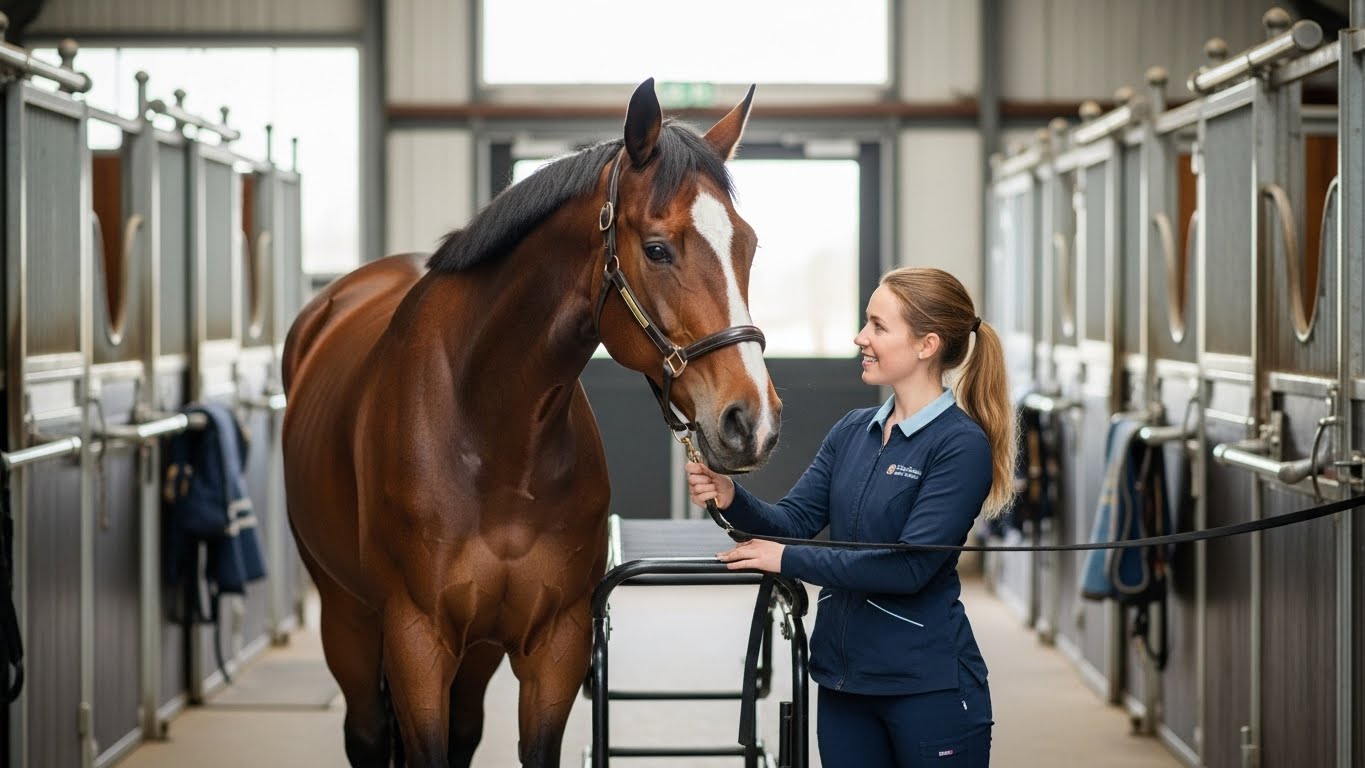
The first time I watched a seventeen-hand show jumper refuse a simple oxer, I knew something was wrong. This wasn’t stubbornness. This was a horse telling me, in the only language he had left, that his body had stopped cooperating. Three veterinarians, two chiropractors, and one very expensive ultrasound later, we landed on a diagnosis that surprised no one who had been paying attention: chronic low-grade inflammation in the deep digital flexor tendon. Nothing dramatic. No catastrophic failure. Just the slow, grinding erosion of an athlete’s foundation.
That experience reshaped everything I thought I knew about equine care. We spend thousands on training, on feed, on farrier work. But we often miss the quiet signals until they become loud problems. The horse in question eventually returned to competition, but the journey taught me a hard lesson about reactive versus proactive management. This blog exists because that lesson needs sharing.
The Hidden Epidemic in Your Barn
Walk down any competition aisle on a Sunday morning. You will see the ice boots, the liniments, the NSAIDs carefully measured into feed buckets. What you won’t see is the conversation happening beneath the surface. Horses are prey animals. Their survival depends on masking vulnerability. By the time a horse shows visible lameness, the compensatory patterns have already begun shifting weight to other limbs, loading the opposite suspensory ligament, creating a cascade of secondary issues that outlast the original injury.
Clinical research suggests that up to sixty percent of performance horses carry some form of subclinical musculoskeletal inflammation at any given time. These are not lame horses. They pass vet checks. They win classes. But they are slowly accumulating tissue damage that will eventually declare itself as a career-ending injury or a mysterious performance decline that defies conventional diagnosis.
The real complication here is mechanical. When inflammation persists at low levels, it alters how collagen fibers heal. Instead of the parallel alignment found in healthy tendon tissue, you get disorganized scar formation. That tissue is weaker, less elastic, and more prone to re-injury. Each flare-up adds another layer of disorganization. The horse doesn’t feel acute pain. He feels stiffness, reluctance, a subtle change in gait that his rider interprets as laziness or a bad day.
The Problem-Solution Pivot Every Owner Faces
Let me be direct about what keeps owners up at night. You have a horse who worked beautifully six months ago. Now he’s sour. Your trainer says push through it. Your vet says rest and oral medication. Your bank account says you cannot afford another MRI. The cost of ignoring this progression isn’t just a veterinary bill. It is the slow erosion of everything you have built together. Missed competition seasons. Months of stall rest that create behavioral problems. The gut-wrenching decision about quality of life that comes years earlier than you ever anticipated.
Traditional approaches follow a predictable arc. Rest until the horse looks sound. Introduce controlled exercise. Watch for regression. Add another round of anti-inflammatories. The problem with this model is that it treats the expression of pain rather than the underlying tissue environment. You are managing symptoms while the cellular damage continues.
What you actually lose when this cycle repeats:
-
Training momentum measured in months, not weeks
-
Trust between horse and rider as communication breaks down
-
Muscle symmetry that took years to develop
-
Mental bandwidth that should go to performance, not worry
What recovery should accomplish instead:
-
Reduction in tissue temperature indicating resolved inflammation
-
Return to baseline range of motion without guarding behavior
-
Normalized weight distribution across all four limbs
-
Resumption of previous work levels without compensatory movement
This brings us to the central question of modern equine pain management. What actually changes the tissue environment rather than just masking the signals?
Modern Approaches to Pain Relief for Horses
The landscape of equine pain management has shifted dramatically in the last decade. Where we once relied almost exclusively on systemic medications and passive rest, we now understand that targeted intervention produces superior outcomes. Pain relief for horses no longer means choosing between bute-induced gut issues and watching your horse suffer in silence. The therapeutic window has expanded to include modalities that address inflammation at its source while supporting the body’s natural repair mechanisms.
Systemic NSAIDs like phenylbutazone and flunixin meglumine remain valuable tools for acute situations. They block prostaglandin production at the enzyme level. But they cannot differentiate between inflammatory signals that need stopping and those that support healing. Chronic use carries well-documented risks including right dorsal colitis, renal papillary necrosis, and protein-losing enteropathy. These are not theoretical concerns. Every equine practitioner has seen the cascade of complications from prolonged NSAID administration.
The mechanical reality of equine locomotion adds another layer of complexity. A thousand-pound animal distributed across four slender limbs generates extraordinary forces. When pain causes a horse to shift weight, even subtly, the overloaded limbs experience strain that accelerates soft tissue breakdown. Effective pain relief must therefore achieve two objectives simultaneously: reduce the inflammatory signal in damaged tissue and restore normal loading patterns before secondary injuries develop.
Cryotherapy represents a fundamentally different approach to this problem. Instead of systemic pharmaceutical intervention, targeted cold therapy creates localized vasoconstriction that reduces metabolic demand in injured tissue. The inflammatory cascade requires blood flow, heat, and cellular activity. Cryotherapy interrupts all three without introducing foreign compounds into the horse’s system. The tissue temperature drops. Capillary permeability decreases. Pro-inflammatory cytokines slow their production. The horse experiences relief without the metabolic burden of processing medication through the liver and kidneys.
How Targeted Cold Therapy Changes the Game
The technology has evolved beyond standing a horse in a bucket of ice water. Modern cryotherapy equipment delivers precise temperature control across specific anatomical regions. The science is straightforward: when tissue temperature drops below fifteen degrees Celsius, nerve conduction velocity slows. Pain signals take longer to reach the brain. The horse experiences this as genuine relief, not sedation or dissociation.
What happens inside the tissue during targeted cryotherapy:
-
Blood vessels constrict, reducing fluid accumulation in damaged areas
-
Cellular metabolic rate decreases, limiting secondary hypoxic injury
-
Muscle spindle activity reduces, breaking pain-spasm cycles
-
Lymphatic drainage improves once normal temperature returns
The clinical application matters enormously. Five minutes of cold exposure does almost nothing. Fifteen minutes begins shifting tissue temperature. Thirty minutes achieves therapeutic depth in superficial structures like tendons and ligaments. The equipment must maintain consistent temperature throughout this window. Fluctuations allow reactive hyperemia, the rebound blood flow that actually increases inflammation after cold therapy ends.
Quantifiable outcomes from proper cryotherapy protocols:
-
Recovery time following intense exercise reduced by approximately forty percent
-
Visible reduction in digital pulse strength within one treatment session
-
Normalized skin temperature differential between affected and unaffected limbs
-
Return to baseline flexion test results after three to five consecutive days of treatment
Personal Experience: What I Learned from One Hundred Equine Cases
The horse I mentioned at the beginning of this article taught me something I could not have learned from textbooks. After his tendon injury, we tried everything. Stall rest. Gradual hand-walking. Shockwave therapy. Platelet-rich plasma injections. Each intervention helped, but nothing stuck. The inflammation would reduce, then return as soon as work resumed. The veterinary team was puzzled. The imaging showed a healing tendon. The clinical picture showed a horse who could not stay sound.
What finally broke the cycle was attention to something no one had considered: the opposite hind limb. Compensatory loading during his initial injury period had created low-grade suspensory desmitis in the previously sound leg. We had been treating the original injury while the secondary problem grew. Once we addressed both limbs simultaneously with targeted cryotherapy following every workout, the pattern finally shifted. Within two weeks, his gait normalized. Within a month, he was trotting sets he hadn’t managed since before the injury.
That experience fundamentally changed my treatment philosophy. We now assess every horse as a connected system rather than a collection of individual injuries. The limb that looks sound may be the one that needs attention. The horse who feels fine may be one workout away from breakdown. Proactive cryotherapy following intense exercise has prevented countless injuries in my practice. I cannot prove a negative, but I can point to horses still competing at age twenty whose peers retired years ago.
Integrating Advanced Recovery into Daily Management
The practical implementation matters more than the theoretical framework. You do not need a veterinary degree to use cryotherapy effectively, but you do need discipline and observation. The following protocol has worked consistently across dozens of horses in my direct experience:
Post-exercise application window: The first thirty minutes after intense work represents the optimal intervention period. Inflammatory processes activate during exercise but peak in the recovery phase. Interrupting this cascade early produces better results than treating established inflammation.
Duration and frequency: Twenty to thirty minutes of continuous cold exposure per limb, repeated once or twice daily during acute flare-ups. Maintenance applications following heavy work sessions only, not as a daily default. Overuse of cryotherapy can delay the beneficial inflammatory phase of tissue healing.
Signs of appropriate response: The horse should stand quietly during treatment. Resistance or agitation suggests either equipment discomfort or insufficient acclimation. Following treatment, you should observe decreased digital pulse, reduced joint filling if present, and a more willing attitude toward movement.
Contraindications to respect: Do not apply cryotherapy over areas with compromised circulation, known thrombosis, or cold hypersensitivity. Horses with advanced arthritis may find deep cold uncomfortable rather than therapeutic. Adjust temperature and duration based on individual response rather than following rigid protocols.
The Economic Argument for Prevention
Let me address the financial reality directly because pretending cost doesn’t matter helps no one. A course of targeted cryotherapy costs significantly less than one week of stall rest and associated supportive care. It costs dramatically less than surgical intervention for a catastrophic breakdown. And it costs nothing compared to the emotional toll of watching a horse struggle through a preventable decline.
Direct cost comparison based on current veterinary pricing:
-
One month of phenylbutazone therapy: approximately seventy-five to one hundred fifty dollars plus ongoing monitoring bloodwork
-
Single shockwave treatment session: three hundred to six hundred dollars
-
Platelet-rich plasma injection series: one thousand to two thousand dollars
-
Thirty-day stall rest with hand-walking: incalculable training interruption
-
Targeted cryotherapy equipment purchase: one-time investment amortized across the horse’s entire career
The numbers favor prevention. They always have. But we resist because prevention requires consistency while crisis demands action. The discipline to apply cold therapy after every hard workout, even when the horse looks fine, even when you are tired, even when the schedule runs late. That discipline separates horses who retire sound from those who leave the sport early.
Frequently Asked Questions
Q: How soon after injury can I begin cryotherapy, and when should I avoid it entirely?
A: You can begin cryotherapy immediately following acute injury, ideally within the first six hours. The sooner you reduce tissue temperature, the less secondary hypoxic damage occurs. However, avoid cryotherapy on wounds with active bleeding, areas with known frostbite history, or limbs with severe arterial insufficiency. For fractures or suspected fractures, stabilize the injury and consult your veterinarian before applying any modality. Never apply cold therapy to a horse showing signs of systemic illness or fever, as the peripheral vasoconstriction may interfere with appropriate immune response.
Q: Can cryotherapy replace veterinary-prescribed anti-inflammatory medications?
A: No. Cryotherapy serves as an adjunctive therapy, not a replacement for appropriate medical care. Your veterinarian determines whether systemic NSAIDs are necessary based on injury type, severity, and individual horse factors. For mild to moderate soft tissue injuries, cryotherapy may reduce or eliminate the need for medication. For severe inflammation or pain, you need both approaches working together. Never discontinue prescribed medications without veterinary approval, regardless of how well your horse appears to be responding to cold therapy.
Q: How do I know if I am applying cryotherapy correctly versus causing tissue damage?
A: The horse tells you. Appropriate cold therapy produces initial mild discomfort that resolves within two to three minutes as the area becomes numb. Signs of excessive cold exposure include vigorous attempts to remove the limb from the device, persistent shivering, skin that remains blanched white for more than ten minutes after treatment ends, or visible ice crystal formation on hair shafts. The target tissue temperature should feel very cold but not painful to your touch through a barrier. When in doubt, shorten duration rather than risk cold injury. Start with fifteen-minute sessions and extend only as the horse tolerates well.
Q: How frequently should I use cryotherapy for a horse with chronic, low-grade lameness?
A: For chronic conditions, apply cryotherapy following every workout that exceeds light walking, typically three to five sessions weekly. Do not apply on complete rest days unless the horse shows active inflammatory signs such as heat or filling. Overuse of cryotherapy in chronic cases can mask important pain signals and delay necessary diagnostic investigation. If your horse requires daily cryotherapy to remain comfortable, you have missed a more significant underlying problem that needs veterinary attention. Use the response to cryotherapy as diagnostic information. Decreasing need for treatment indicates healing. Stable or increasing need indicates something else is wrong.
Q: What specific signs should I watch for that tell me cryotherapy is working versus just providing temporary relief?
A: Meaningful therapeutic response shows as measurable changes in objective parameters, not just subjective comfort. Track digital pulse strength before and after each session using the same finger pressure each time. Document limb circumference at standardized locations. Observe weight distribution during stance phase at the walk. A horse genuinely responding to cryotherapy will show decreased digital pulse within twenty-four hours, reduced circumference within forty-eight to seventy-two hours, and normalized gait within five to seven days of consistent treatment. Temporary relief without tissue improvement presents as comfort during and immediately after cold application followed by full symptom return within one to two hours. This pattern suggests you are managing sensation rather than resolving inflammation.